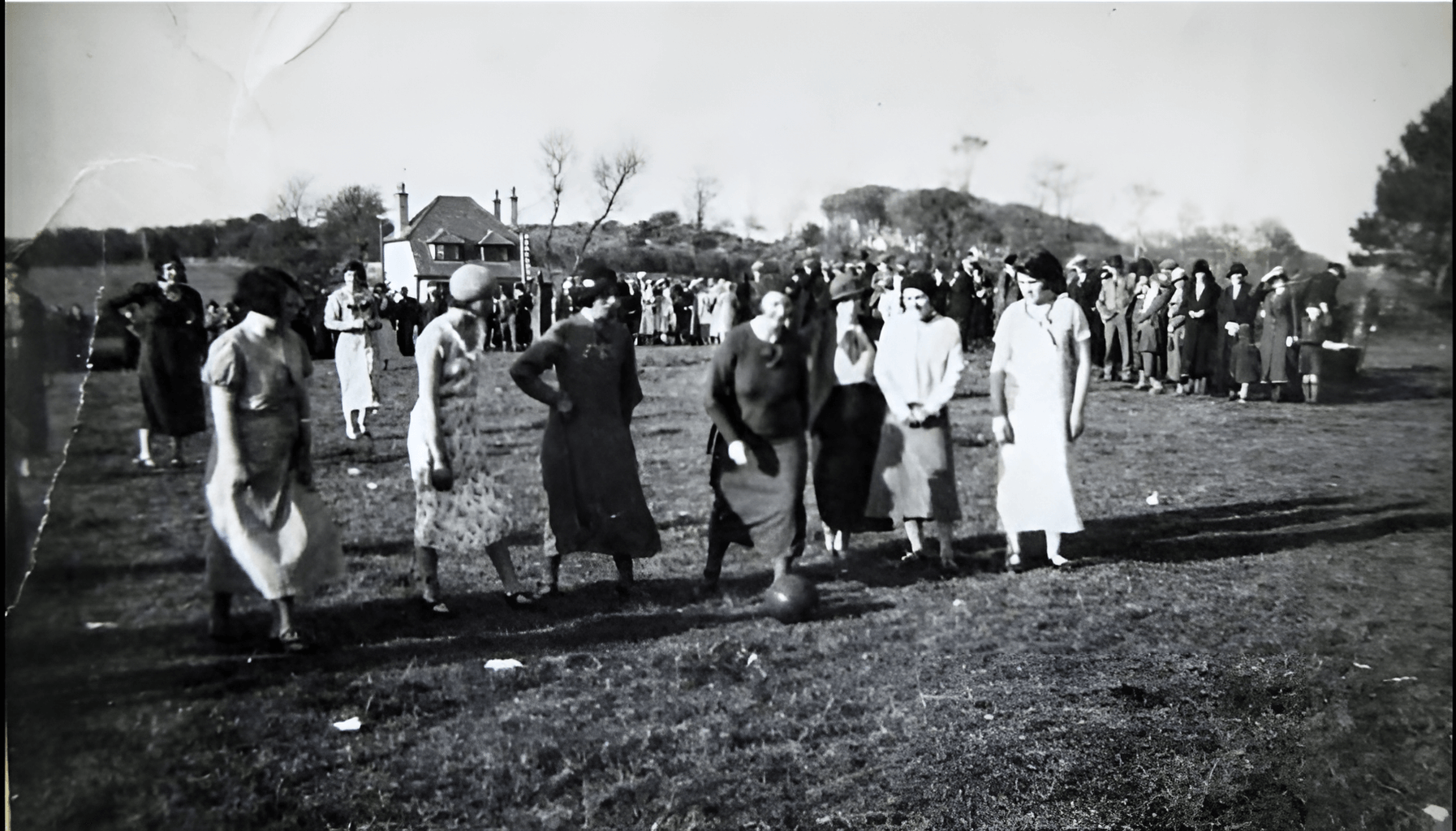
Women’s football became popular during World War I, as many men were fighting overseas. Women working in factories began forming teams and playing matches to raise money for war charities.
Crowds for women’s matches across Britain sometimes reached tens of thousands.
In 1921, the The Football Association (FA) banned women from playing on grounds affiliated with the association, claiming the sport was “unsuitable for females.”
Although this ban was issued in England, its influence extended into Wales because Welsh football structures were closely linked to the English FA.
The Football Association of Wales (FAW), founded in 1876, did not actively support women’s football during this period. As a result:
- Women’s teams struggled to find pitches.
- Matches were pushed to informal or charity settings.
- Development of leagues and youth systems stalled.
- The sport remained largely unofficial for decades.
This period severely limited growth in Wales.
The ban by the English FA was lifted in 1971, following pressure from UEFA, which required national associations to take responsibility for women’s football.
In Wales:
- The Welsh Women’s Football Association was formed in 1970.
- Wales played its first official women’s international match in 1973 against England.
- Grassroots leagues began forming across South and North Wales.
- Participation slowly increased, though funding and facilities were still limited
A major turning point came in 1993 when the Football Association of Wales officially took over responsibility for women’s football from the WWFA.