
The First World War: Airships in the Sky
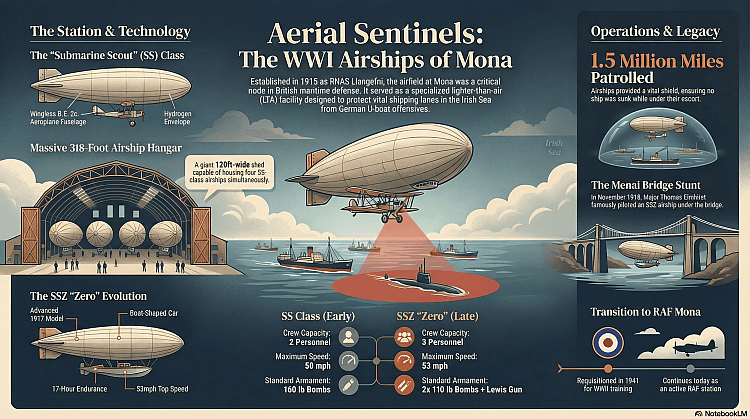
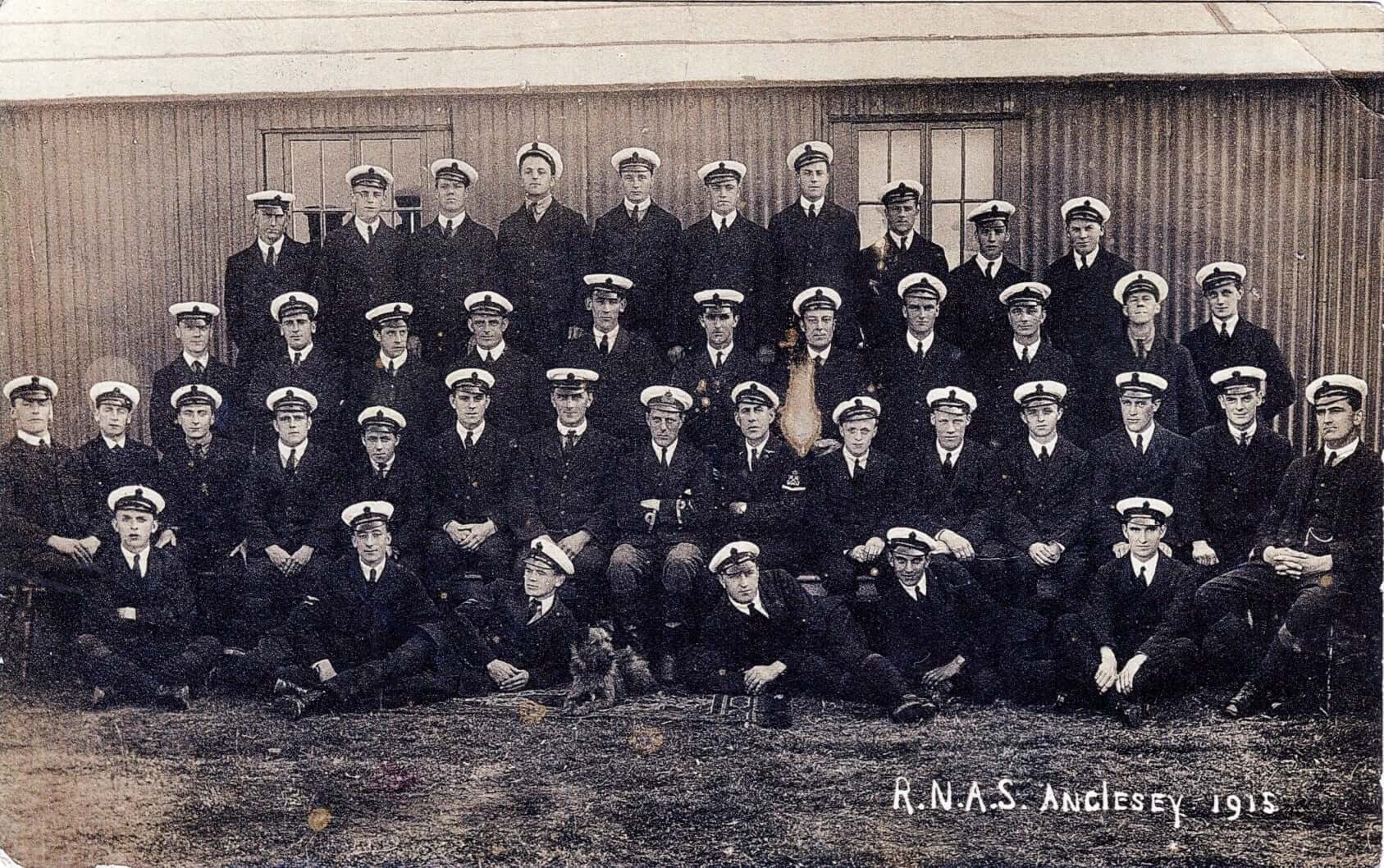
Gwalchmai became a strategic site for British naval defense during World War I. To counter German U-boats in the Irish Sea, the Royal Naval Air Service (RNAS) established an airship (dirigibles) base named RNAS Anglesey (also known as RNAS Gwalchmai or RNAS Llangefni).
On February 4th 1915, Germany announced that the coastal waters of Britain and Ireland were regarded as war zones and every merchant vessel would be sunk using Uboats.
On 28th February 1915 a conference was held to discuss the (U-Boat) submarine threat where the idea of using small airships to patrol coastal water to search for them was agreed. Over the next few weeks a suitable airship design was agreed upon.
It consisted of a ET Willows type non-rigid gas envelope attached to a BE2C aircraft type fuselage. By Mid March 1915 the prototype was ready and its first flight took place on 18th and revealed that the hybrid construction had good handling qualities. A production line was organized for what became officially known as Submarine Scout (SS) or unofficially as “Blimps”.
Ernest Thompson Willows (1886–1926) was a pioneer Welch aviator and airshop builder from Cardiff. He became the first person in the United Kingdom to hold a pilot’s certificate for an airship when the Royal Aero Club awarded him Airship Pilots Certificate No. 1.


The airships had an overall length of 143 feet with a 27 feet beam. Power came from a 70 or 75 HP engine giving a cruising speed of around 40 mph. The gas capacity was around 60,000 cubic feet.The 2 man crew , one pilot and 1 gunner/ wireless operator could cruise for around 8 hours.
Commissioned on September 26, 1915, the Mona station featured a massive airship hangar (120ft by 318ft) and hydrogen production sheds. To protect the delicate envelopes from North Wales’ volatile winds, four large windbreaks were constructed at the hangar entrances.Wooden huts were built to accommodate personnel which varied between 130-150men. The station was part of No 14 Group (Naval) with an initial establishment of four airships , SS 22,24,25 and 33. In June 1917 Ss22,24 & 33, were replaced with the more powerful three man SSP, SSP1,5 &6. Then again in April 1918 they were replaced SSZ 34,35,50 &51.These crafts could also float on water.
The station was part of No 14 Group (Naval) with an initial establishment of four airships , SS 22,24,25 and 33. In June 1917 Ss22,24 & 33, were replaced with the more powerful three man SSP, SSP1,5 &6. Then again in April 1918 they were replaced SSZ 34,35,50 &51.These crafts could also float on water.

When the station was commissioned in September 1915, the permanent production infrastructure was not yet operational. During these first few months, the hydrogen required to inflate the airships was transported to the site in gas cylinders via rail and road.
By February 1916, the station’s infrastructure had matured with the completion of a permanent hydrogen production facility.
- The Silcol Plant: This specialized “silcol” plant allowed for the on-site manufacture of lifting gas, by electrolysis of water making the base self-sufficient for its daily operational needs.
The first commander of the base was Major George Herbert Scott, the later Commander of the R34, and Deputy Director of Airship Development for the Imperial Airship Scheme.
More images from RAF Mona and the airships
Airships over Anglesey : Oral History’s
Technical Evolution: From SS to SSZ
The airships at Llangefni represented a rapid progression in aviation technology. The station transitioned through three primary classes of non-rigid airships:
- Submarine Scout (SS) Class:They were created by slinging a wingless B.E.2c aeroplane fuselage and engine beneath a 60,000-to-70,000 cubic foot hydrogen envelope. These “blimps”—named for the “limp” nature of their non-rigid envelopes—were cheap and could be assembled in weeks.
- Sea Scout Pusher (SSP) Class: Introduced in June 1917, these featured improved car designs but were soon eclipsed by more advanced models.
- Sea Scout Zero (SSZ) Class: Entering service later in the war, the SSZ featured a boat-shaped, watertight car, a three-man crew, and a Rolls-Royce Hawk engine. They were significantly more capable, boasting greater speed, endurance, and a heavier bomb load. ( either 3*100Lbs or a 230lb and a 100lbs bomb).The SS Zeros were fitted with machine guns. 77 of this class were built and were very popular with the crews. The last class to be designed were the SS Twin’s which could carry a crew of 5, with a top speed of 57mph and stay airborne for up to 2 days.
Experimental work at the station included using hydrophones suspended under airships to detect submarines, deploying phosphorus for smoke screens, and even dangerous attempts to use hydrogen from the envelope to fuel the engine
The airships, including Submarine Scout (SS) and Sea Scout Zero (SSZ) classes, escorted convoys and searched for mines across an area encompassing the approaches to the Port of Liverpool.
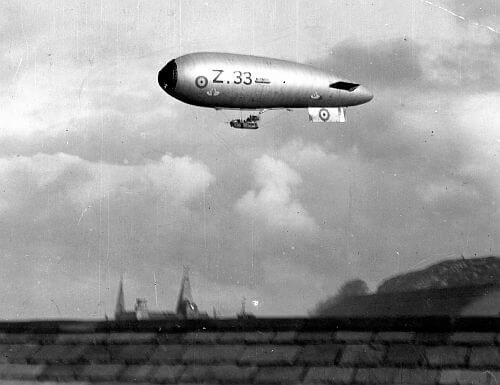
The primary mission of the Anglesey airships was escorting troopships and mail steamers between Holyhead and Kingstown (Dublin). The mere presence of an airship provided a massive deterrent; U-boats were forced to remain submerged, robbing them of the surface speed required to intercept ships. The RNAS proudly claimed that no ship was ever sunk when escorted by an airship.
The primary means of detection was through constant visual reconnaissance from the airship’s gondola.
- Periscope Wakes: Crews looked for the distinctive “feather wake” created by a periscope moving through the water.
- Surface Discoloration: Oil slicks or fuel patches were frequent giveaways, appearing as dark trails or bright, fresh tracks on the sea surface.
- Rising Bubbles: Airship logs frequently record the sighting of air bubbles rising to the surface, which often indicated a submerged object was in motion.
- Wildlife Indicators: Adept crews would watch for gulls circling around the thin, nearly invisible wake of a periscope.
- Direct Submerged Sightings: In clear weather, an airship could fly low enough to spot the long dark shadow of a submarine traveling beneath the surface.
- Wireless Communication: Once a contact was made, airships used radio equipment to relay the submarine’s exact location to a relay station (such as Llaneilian on Anglesey) or directly to surface hunting flotillas.
- Target Marking: To assist surface ships in their attack, airship crews used Lewis machine gun fire, flares, or smoke screens to pinpoint the submarine’s location for destroyers dropping depth charges.
Once the presence of a U-Boat had been established, information was passed via wireless to navy attack boats based in Holyhead to complete the destroy mission. Two special wireless communications stations for airships were built. The “X” station was used to transmit and receive messages and the “B” station was for position finding.
The Marconi Co built and “X” station at Amlwch and a “B” station at Rhyl.
Patrols typically lasted eight hours and covered a zone reaching Morecambe Bay to the east and Dublin to the west. To extend their reach, a “mooring-out” site was established in July 1918 at Malahide Castle in Ireland, allowing Mona based airships to refuel and refit in woodland clearings that provided natural windbreaks.
By 1916 a whole chain of RNAS airship stations had been built around the UK coast.
Operating hydrogen dirigibles in coastal mists and high winds was inherently dangerous. Several incidents became part of local lore:
- The “Cow Incident” (1916): On November 9, 1916, airship SS18 hit a cow while landing at Llangefni. The impact smashed the undercarriage and killed the animal. Lightened by the crash, the airship was blown out to sea; the engineer, AM J.W. Young, was lost and presumed drowned, while the pilot was rescued by a coal tramp.
- Engine Failures and Civilian Heroics: Mechanical unreliability was common. In April 1918, SSZ35 suffered an engine failure and drifted across the island. It came down near Cerrigeinwen, where local civilians assisted the crew in “walking” the massive craft back to the base.
- Endurance Records: In June 1918, SSZ35 set a record by remaining airborne for 26 hours and 10 minutes during a patrol that routed through Ireland, Scotland, and the Isle of Man.
In April 1918, the RNAS merged with the Royal Flying Corps to form the Royal Air Force (RAF), and the station was renamed RAF Llangefni. Following the Armistice on November 11, 1918, airships flew to Holyhead to drop symbolic bombs in celebration
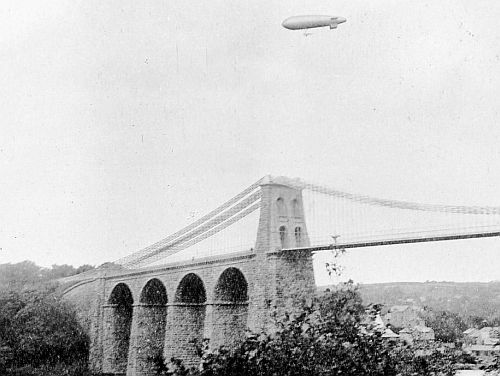
The most famous act of bravado occurred in November 1918. Major Thomas Elmhirst, the station’s Commanding Officer, accepted a bet to pilot an SSZ airship directly under the Menai Suspension Bridge. Navigating the 143-foot dirigible filled with flammable gas through the narrow clearance was an extraordinary feat of skill. Elmhirst later became a senior RAF commander, and the stunt is remembered as one of the most daring moments in Welsh aviation history
By 1919, the era of the dirigible was ending, as aeroplanes offered superior speed and capacity. Post-hostilities, the airships were used to locate the thousands of German mines remaining in the shipping lanes.
By January 24, 1919, the last daily reports were received from the station, noting that all airships at the site had been deflated.
https://irp.cdn-website.com/70162e62/files/uploaded/RAF%20Valley%20Aircraft%20-%20RNAS%20Mona.pdf
In November 1920, the base was sold to the Anglesey County Council. The massive hangar was demolished and sold for scrap, and some buildings were repurposed as a tuberculosis and scarlet fever isolation hospital.
The RNAS Anglesey Old Boys Association was a veterans’ organisation formed by the officers, petty officers, and ratings who served at the RNAS Llangefni airship station during World War I. The association’s reunions were primarily held in London, reflecting the geographical dispersal of the personnel after the war.
One of the association’s most significant acts was the presentation of a commemorative plaque to the Anglesey County Council on Saturday, December 6, 1969.
- The Plaque: It features a map of Anglesey with Bodffordd marked, and an aluminium airship (depicting SSZ34) positioned just above the village.
- Inscription: The plaque was presented “on behalf of the officers, petty officers and ratings who served on the airship station during World War 1 and formed the R.N.A.S. Anglesey Old Boys Association”.
- Current Location: The plaque was originally placed in the Anglesey Shirehall in Llangefni, situated above the Anglesey copy of the Welsh Book of Remembrance.
The final reunion in April 1970 marked the end of half a century of formal commemoration by the “old boys” of the Anglesey airship service.

The Second World War: RAF Mona and the POW Camp
In 1941, the strategic value of the site was reaffirmed when it was requisitioned for the construction of RAF Mona. Major construction between 1942 and 1943 transformed the rural site into a robust military installation featuring:
Personnel: By the end of the war, the station was a substantial community housing 1,378 RAF personnel and 408 members of the Women’s Auxiliary Air Force (WAAF)
Concrete Runways: Laid in 1943 to facilitate heavier training traffic.
Hangars: The airfield was equipped with three “Tee” hangars and seventeen blister hangars.
Under the control of RAF Flying Training Command, Mona specialized in producing highly skilled aircrews.
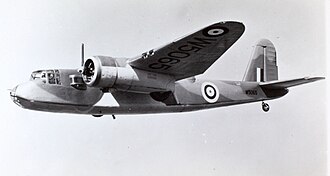
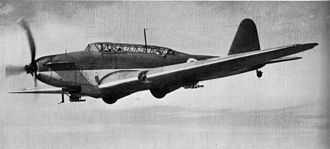
- No. 3 Air Gunnery School (AGS): Moving from Scotland in December 1942, this unit trained the air gunners vital for Bomber Command’s offensive. It operated a fleet of 48 Blackburn Bothas, alongside Fairey Battles and Miles Martinet target tugs.
- No. 8 (Observers) Advanced Flying Unit (AFU): From November 1943 until June 1945, this unit utilized Avro Ansons to train navigators and bomb aimers for night bombing campaigns.
- International Training: In early 1943, the station hosted No. 5 (Pilots) AFU, which was tasked with training Turkish officers using Miles Master aircraft
No. 8 (Observers) Advanced Flying Unit: Operated Avro Ansons for navigation training.

The high-intensity training environment, often involving underpowered or difficult-to-handle aircraft like the Blackburn Botha, resulted in frequent accidents:
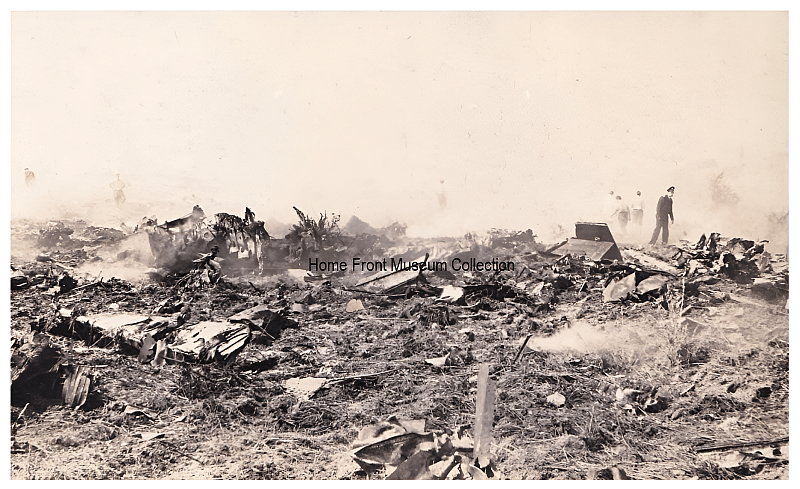
- Mid-air Collision: On May 14, 1943, an Avro Anson and a Blackburn Botha collided during landing/overshooting maneuvers. Both were destroyed, though there were no fatalities.
- Ground Incident: On May 17, 1943, another Botha was written off after striking a boulder during a landing exercise
While primarily a training base, the war directly reached the vicinity of RAF Mona:
- German Heinkel Crash: On November 1, 1941, a Heinkel He.111 was shot down and crashed at Bwlch-y-Fentir Farm, Bodffordd, near the airfield. The aircraft still had its bomb load; one bomb detonated upon impact, while two others remained as unexploded ordnance (UXB).
- Decoy Incidents: On January 2, 1941, enemy aircraft dropped parachute mines at Holland Arms (near Mona). It is believed the pilot mistook a moonlit greenhouse for the glint of the Menai Strait
At the cessation of hostilities in 1945, RAF Mona was placed on care and maintenance. However, its strategic value remained, and it was reopened in 1951 as a relief landing ground (RLG) for RAF Valley. This remains its primary function today, serving as a training site for Hawk T2 fast jets
A vulcan bomber crash landed close to Gwalchmai in 1964 although it was kept quiet as we were still in the “Cold War”.


Prisoner of war camp.
During the Second World War in the 1940s, a Prisoner of War (POW) camp was established on the north edge of Gwalchmai.
- The camp was situated on land between Gwalchmai Uchaf and the A5 road, specifically in the area known as Llain Delyn. Much of the original site has since been developed into a modern housing estate.
- The facility initially housed Italian prisoners and later accommodated Polish personnel.
- At its height, the camp included numerous buildings, with at least ten structures located in the south-east field of the Llain Delyn area alone.
- While most of the buildings were removed by the 1970s, physical evidence still exists in the landscape:Concrete pads and platforms which served as bases for the camp’s structures, remain identifiable.
- A semi-sunken air-raid shelter made of half-round concrete panels (roughly 10 meters long) is preserved in the garden of a private residence.
- The foundations of the original camp roads are believed to still exist beneath the current vegetation.
- Post-War Utility: Following the end of the war and the closure of the camp, the remaining buildings were repurposed for various agricultural and farm uses until the 1970s.
The camp is clearly visible in RAF aerial photographs taken in August 1945, which show the high density of buildings that once occupied the site
