
The telecommunications infrastructure in the historic village of Gwalchmai represents a vital link in the regional network, blending mid-20th-century origins with modern digital requirements. The site consists of two primary components: the physical telephone exchange building and a nearby communications mast, both of which have evolved to serve the changing needs of the community.
The Gwalchmai Telephone Exchange, situated on London Road, is recognized by the Openreach network ID “WNGW”. Historically, it was part of the Holyhead exchange group and operated under the STD area code 0407 prior to the national “PhONE Day” renumbering in 1995 when it become 01407. Today, Ofcom classifies it as a Market 1 exchange, a designation indicating it serves a relatively small community communications market compared to high-density urban centers.
The exchange has undergone significant technological shifts, moving from early manual switching to digital broadband services such as DSL. In the modern era, it has been integrated into the Openreach network infrastructure to support fibre services. While Gwalchmai was not identified as an early “FTTP Priority Exchange,” the transition away from legacy technology is well underway; the traditional sale of copper-based services ceased around September 2023. This shift reflects a broader national movement toward fibre-to-the-premises (FTTP) connectivity.
Complementing the exchange is a prominent communications mast located just north of the village. This structure is a recognized landmark in local geography and is documented in Geograph archives. Historically, rural masts of this type were essential components of wireless communication networks, utilized for broadcast signals and telephone backhaul via microwave radio links before the widespread adoption of fibre optics.
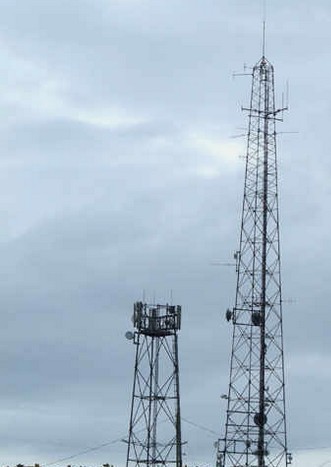
To provide effective 3G and 4G mobile coverage for the rural area, the structure was required to stand approximately 21 metres tall. These modern upgrades were implemented under strict safety guidelines and often utilized the “prior approval” process, which allows telecommunications operators to develop essential infrastructure while the local council maintains oversight on siting and appearance.
Together, the exchange and the mast form the “communications fabric” of Gwalchmai, ensuring that the village remains connected as technology transitions from copper wires and microwave links to high-speed fibre and mobile data. These facilities ensure that even a small Market 1 community retains access to the same essential digital services as larger urban environments.