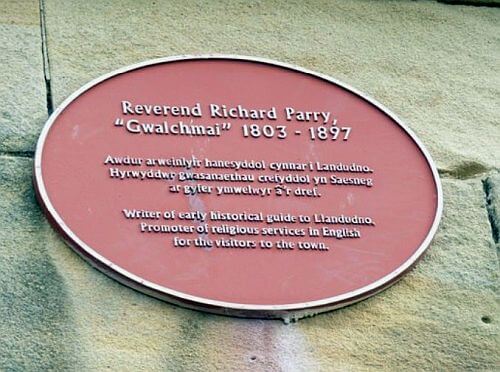
Born on 19 January 1803 in Llannerch-y-medd, he was the son of Richard Parry, a currier and leather manufacturer, and Margaret Williams of Gwalchmai, who had inherited a substantial family estate. His brother, Thomas Parry (1809–1874), shared the same Calvinistic Methodist upbringing.
He received his early education at a local church school but left at the age of 12 to begin an apprenticeship with a saddler. A strong interest in books shaped his early life, and he became actively involved in chapel activities, eventually being elected a deacon while still young. During this time, he also began competing in eisteddfodau.
In 1829, Caledfryn became the Independent minister at Llannerch-y-medd, and the two formed a close friendship. Under Caledfryn’s guidance, he learned the art of cynghanedd. He later joined the Independents himself and began preaching in their chapels.
He was ordained in 1836 as joint minister with Robert Roberts of Treban at Bryngwran. Two years later, in 1838, he moved to serve the churches at Henryd and Conway, where he remained for a decade. In 1848, he relocated to Llandovery, though he did not settle happily there, and by 1850 he had returned to North Wales, taking charge of the churches at Llan-ffestiniog and Bethania in Ffestiniog.
Four years later, he returned to Conway. By this point, he was determined to establish a church in Llandudno, then rapidly developing as a seaside resort. With financial support from several wealthy English benefactors, he successfully built a chapel that accommodated both English and Welsh services.
He retired in 1881 and died on 7 February 1897. He was laid to rest in Llan-rhos churchyard, Llandudno.